

I have wanted to walk the Fife Coast Path for years, and at last, I am standing at North Queensferry station, looking at the map for directions. The full route starts/ends in Kincardine, but I wanted to continue a coastal journey and would plan to end my walk across the Tay Road Bridge instead of continuing to Newburgh. As with the KCIIIECP, I would always choose a route using bridges and public ferries to keep close to the sea. The full path should be considered by anyone who wants to explore the magnificent Forth of Tay and Forth of Firth estuaries.
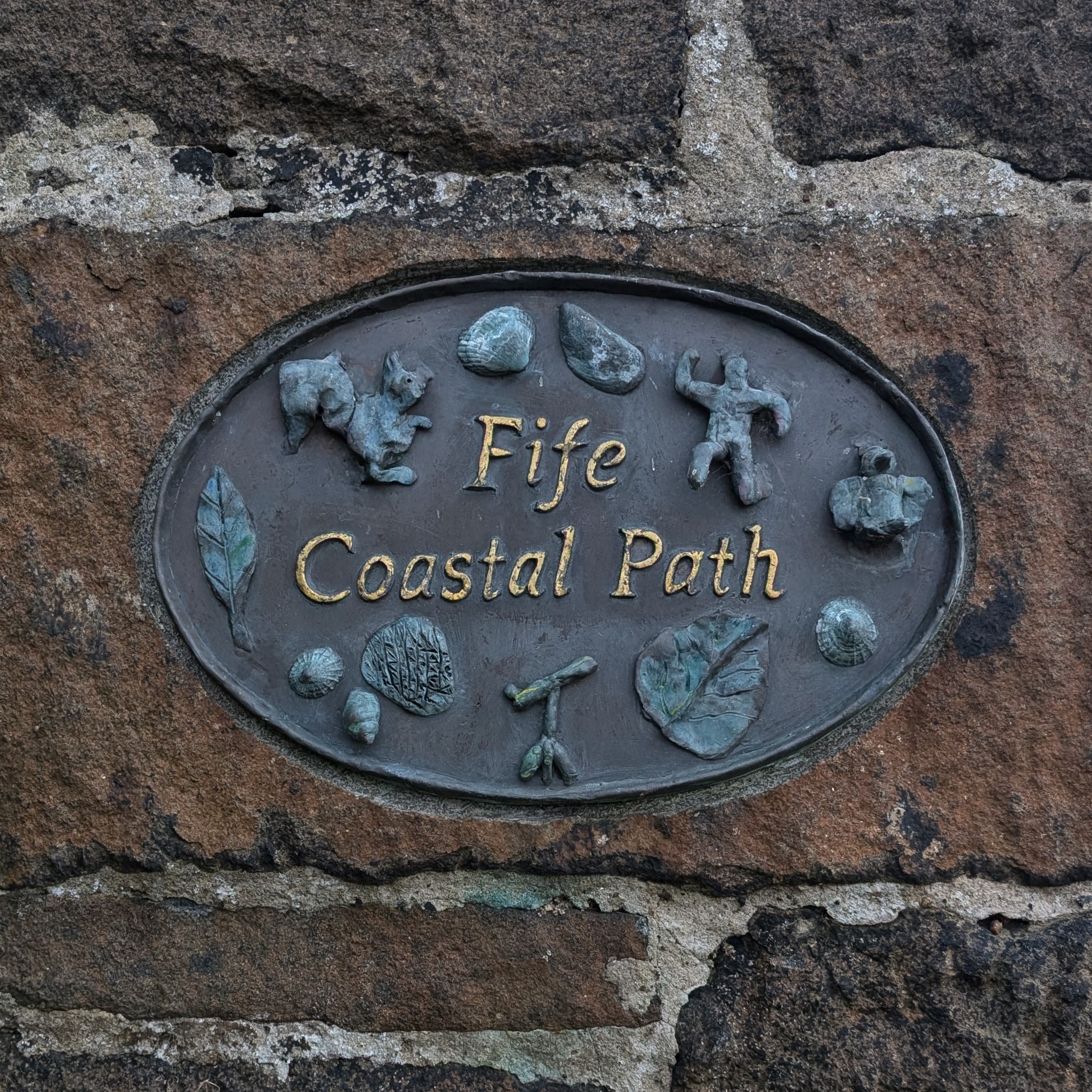
There is a rail service as far as Leven, which is handy to stay in one location for the southern shores. Accommodation options have been very expensive, maybe for the golfers exploring the many superb courses along what is locally known as the Golf Coast. Famous courses, such as St Andrews, Carnoustie, and Kingsbarns, are constant coastline features, but those appear in a few days. Using a Kirkcaldy Hotel as a base, it was easy to return for another look at the stunning Forth Bridge, this time from a different angle and shoreline. There is a beautiful sign to indicate the Fife Coast Path, which directs you along a lovely track around the Inner Bay to Inverkeithing, through lovely properties with envious views of the bridges. You are walking with the Fife Pilgrim Way, which turns inland to St. Andrews – which would make a nice circular route, but I walk into Dalgety Bay and then into the pretty port of Aberdour.
This is easy walking, but I am feeling peckish and look for a bakery in Burntisland for a white roll to cuddle my breakfast sausages. I can see a queue outside Sunrise Bakehouse and join it to chat with the customers permitted to enter the shop individually. When my time comes, I am amazed at the offerings and expand my lunch expectations accordingly. Walking under the rail line to rest by the beach in the lee of the wind, I sit down and open a cardboard box to see an iced poppy seed pastry inside. It is easily the most delicious thing I have ever tasted from a bakery. I have stumbled upon the finest baker in the UK.
My spirits lifted, I walk along the sands to Kinghorn and idle back to Kirkcaldy, along a wide promenade with painted exercise murals on the pavement. Thankfully, I have brought my earplugs as the hotel walls are as thin as the wallpaper, and the next-door occupants are having a party. The location, however, is perfect, and I can walk back to this former linoleum town and make my way to Dysart via the lovely Ravenscraig Park. The port is nestled in the cliffs and asleep at low tide. Unfortunately, I am too early to visit the Fife Coast and Countryside Trust so I make a note to return one day – as this is a coastline which deserves more time to explore.

The streets of Buckhaven and Methil lead to the River Leven, with a McDonalds for lunch, before I can stretch my legs on sand to Lower Largo. At least a hundred rescue Greyhounds are being exercised on the beach, a monthly event, as one owner tells me, who also suggests I hang around in the next village to see the artwork. I am delighted to see the works of Alan Faulds: ceramic pottery gates, statues and post box decorations that are vivid, expressive and colourful, probably depicting villagers in their daily ramblings. I want to go and explore the village to find them all, but I progress through the dunes to Shell Bay, with its attendant caravan park, and then ease around the headland to Earlsferry and then Elie, where it makes sense to stop and catch the X.6 bus to Antsruther, for I have managed to secure a bunk in the Murray Library Hostel. The views from the headland trig. point, just 63 metres, is enough to see the expanse of the Forth of Firth, and pick out the features that have been with me for days: Bass Rock, North Berwick Law, and the Isle of May.

The hostel, run by Darius, is a fantastic place to stay for two days, using the X.6 or 124 bus services to explore the Fife Coast Path. It is next door to a superb fish and chip restaurant, one of many for which this village is rightly famous. The fellow guests are charming, adventurous, and interesting to talk to, and each has an interesting plan to explore Fife. I could stay a week but return to Elie and walk back to the hostel for a cup of tea before heading east again towards Crail. The villages of Pittenweem (very much a working fishing port) and St. Monans deserve more time, but I am on a march to St. Andrews, a stretch goal for the day that will position me nicely to reach Dundee.

Crail has another wonderful bakery that double wraps a pastie for lunch. The coastline opens again as it faces the North Sea and turns a corner at Fife Ness. The lighthouse is hidden in the cliff face, next to a well-preserved pillbox that protected an important airfield in the war. The path becomes rough at times, and erosion makes it difficult to follow, with several impassable beach walks at high tide. The signs suggest you wait, as there are few alternatives other than going backwards. The golf course at Kingsbarns permits you to walk between the fairway and shoreline and then directs you safely through the course. It is gearing up for the Links Open Championship in a few days, and I am stunned by how far the pro-am golfers can accurately hit a ball.

This is wonderful, remote coastal walking, interrupted briefly by a burnside woodland walk to Boarhills before rejoining the coast again. I can just glimpse St. Andrews in the distance, its former Abbey a distinctive town feature. The cliffs and bays are rough going until the path descends to the portside, and I can turn inland to catch the X.6 to Anstruther. The service is efficient, and regular buses run to Dundee, so using this hostel is a cheap way to explore almost all of the coastal paths for 3 or 4 days and is highly recommended. I have a tent, but it sits dry in my backpack.

My last day takes me around the famous golf course – the home of golf, where the game has been played for 600 years! It is busy preparing for an important match, with Kingsbarns and Carnoustie as challenging Links courses. The fairways and greens are immaculate, as is the dress code in the town, except for a few students swimming naked in the tidal pool, much to the delight of the bystanders on the ramparts. The path leads north, joining the NCN Cycle Route 1 for a long way. Walking until I reach Leuchars and can enter the Tentsmuir Forest is painful, for those tracks are monotonous too, and make every effort to avoid the coastline. Still, a quick diversion reveals a stunning wild coastal beach leading to Tentsmuir Point. I drop inland to Tayport, staying on the cycle path, to see the delights of Dundee open out on the opposite bank of the Firth of Tay. A enormous cruise liner departs, as I catch sight of Tay Bridge, which is a 2 kilometre walk in the central reservation, until you reach the city.

I planned to head north to Aberdeen, but my feet complain about the cycle path, and the rail lines are closed when I plan to arrive on a Sunday. Both the day service and the sleeper are not running (the sleeper also doesn’t run on Saturdays), so I decided the best use of my time is to explore the Dundee art scene on a rest day. The V&A, DCA and McManus Galleries exceed all expectations, and I am captivated by the work. It seems a fitting end to a 200-mile walk from Berwick, but I am unsure what I will do next, as I have cycled north to John o’Groats before, and waymarked footpaths are becoming rare. You can follow St. Duthac’s Pilgrim Way to Aberdeen, and then explore beaches, and the Moray Coast Path to Inverness, then you can walk the John o’Groats Trail to the northern tip of Scotland.

 Trail Planner
This sounds like a very interesting area and one that most of us don’t know. Thank you for this.
LikeLike
Indeed. I would recommend, as it compares to te Northumberland Coast and the South West. THe paths are very good.
LikeLike
enthralling! 11 2025 King Charles III England Coast Path: River Stour and Orwell estuaries (Harwich to Felixstowe) elegant
LikeLike